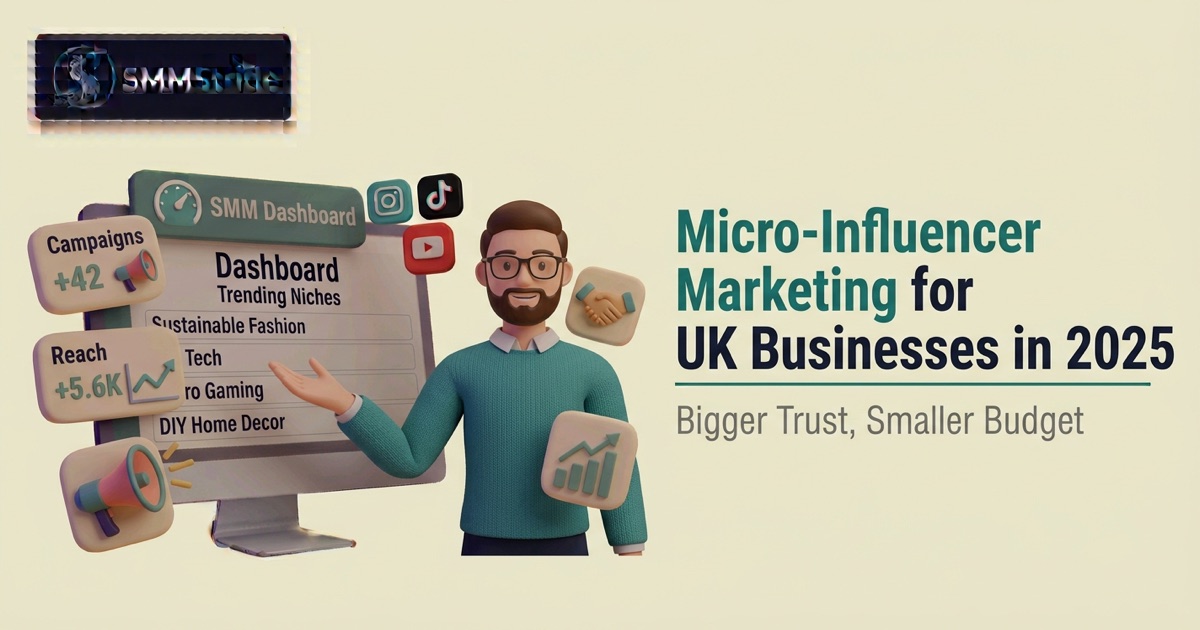
Micro-Influencer Marketing for UK Businesses in 2025
Micro-influencer marketing in the UK is no longer a budget alternative to celebrity endorsements — it's the smarter strategy. In 2025, brands working with creators who have between 1,000 and 100,000 followers are consistently outperforming those chasing mega-influencer deals, with higher engagement rates, stronger audience trust, and a fraction of the cost. If you're a UK business looking to grow on social media without burning through your marketing budget, this guide covers exactly how micro-influencer marketing works, why it outperforms, and how to build a credible presence that makes creators want to work with you.
What Is Micro-Influencer Marketing and Why Does It Work in the UK?
A micro-influencer is typically defined as a creator with between 1,000 and 100,000 followers in a specific niche — fitness, food, interiors, finance, beauty, and so on. What makes them valuable isn't their reach — it's their relationship with their audience. Their followers trust their recommendations in a way that simply doesn't scale to larger accounts.
UK consumers are increasingly sceptical of polished advertising. Studies consistently show that authenticity drives purchase decisions, particularly among 18–34-year-olds. A micro-influencer based in Manchester recommending a local skincare brand carries far more weight with their audience than a national campaign featuring someone with 5 million followers who's clearly paid per post.
The data backs this up. Micro-influencers in the UK typically achieve engagement rates of 3–8%, compared to under 1% for accounts with over 1 million followers. That means more comments, more saves, more clicks — and ultimately, more conversions per pound spent.
Finding the Right Micro-Influencers for Your Brand
The biggest mistake UK businesses make is prioritising follower count over audience alignment. A creator with 8,000 highly engaged followers in your exact niche will deliver better results than someone with 90,000 broadly-interested followers who rarely interact with sponsored content.
Here's where to find micro-influencers who actually fit:
- Instagram and TikTok hashtags: Search niche-specific hashtags relevant to your product. Creators who consistently appear in results and generate engagement are your targets.
- Your own customer base: Check who's already tagging your brand. These warm leads often make the best ambassadors because the relationship is genuine.
- Creator marketplaces: Platforms like Heepsy, Collabstr, and Influencer.co allow you to filter by location, niche, engagement rate, and audience demographics — invaluable for UK-specific campaigns.
- LinkedIn and community groups: For B2B niches, LinkedIn micro-influencers in sectors like fintech, HR, and professional services are underutilised and often highly effective.
When vetting a creator, check three things before outreach: their average engagement rate (aim for above 3%), the authenticity of their comments (generic emoji responses signal bought engagement), and whether their audience is genuinely UK-based if that matters for your campaign.
Building a Social Profile That Attracts Micro-Influencer Partnerships
Here's the part most marketing guides skip: micro-influencers vet you too. Before agreeing to a collaboration, they'll check your social profiles. A business account with 47 followers and sparse content sends a signal that you're either new, inactive, or not worth associating with.
This is where social proof becomes a practical business tool, not just a vanity metric. Building a credible baseline presence — genuine-looking follower counts, consistent posting, and visible engagement — signals to potential creator partners that your brand is established. It also reassures their audience when a recommendation is made.
For UK businesses building that foundation, smmstride.net offers affordable social media growth services starting from £1.29, with no password required and delivery typically within 1–6 hours. It's not a replacement for organic strategy — it's the credibility baseline that makes your outreach land. Creators and their agents are far more likely to respond positively to a brand account that looks established.
Think of it like a physical storefront: if your windows are empty and your shelves are bare, customers walk past. Social proof is your window display.
Structuring a Micro-Influencer Campaign That Actually Converts
Once you've identified suitable creators and your brand profile is credible, the campaign structure determines whether you see real returns. Avoid one-off posts. The most effective micro-influencer marketing in the UK runs over a sustained period, allowing audiences to see consistent brand association rather than a single sponsored mention.
A practical structure for UK businesses:
- Gifting campaigns: Send product to 10–20 relevant micro-influencers with no obligation to post. A proportion will post organically — and those posts carry the highest trust signals because they're unscripted.
- Affiliate partnerships: Offer a personalised discount code with a revenue share. This incentivises ongoing promotion and gives you trackable ROI per creator.
- Long-term ambassador arrangements: Pay a monthly retainer for consistent content — Stories, Reels, TikToks — over 3–6 months. Audiences begin associating the creator with your brand over time.
- User-generated content (UGC) licensing: Commission content you can repurpose across your own paid ads and organic channels. Often more cost-effective than producing brand content in-house.
Always agree on deliverables, usage rights, and disclosure requirements upfront. The ASA (Advertising Standards Authority) requires clear disclosure of paid partnerships in the UK — ensure every post includes #ad or equivalent. Failing to do so puts both your brand and the creator at risk.
Measuring ROI on Micro-Influencer Marketing
One of the persistent criticisms of influencer marketing is that it's difficult to measure. That's largely a planning failure, not a channel failure. Set your KPIs before the campaign begins, not after.
The metrics that matter most for UK micro-influencer campaigns:
- Engagement rate per post: Likes, comments, saves, and shares relative to follower count. This tells you whether the content resonated.
- Traffic from creator links: Use UTM parameters on any link shared by the creator so you can attribute web traffic accurately in GA4.
- Discount code redemptions: The most direct revenue attribution method if you're running affiliate-style partnerships.
- Follower growth during campaign period: A secondary indicator — not the primary goal, but a useful signal of brand awareness impact.
- Cost per engagement (CPE): Total campaign spend divided by total engagements. Compare this across creators to identify your best performers for scaling.
A realistic benchmark: well-matched UK micro-influencer campaigns typically deliver a CPE of £0.05–£0.30 and a return of 3–6x spend when affiliate tracking is in place. These figures vary significantly by niche and campaign type.
Why Social Media Growth Services Support Influencer Campaigns
Brands running micro-influencer campaigns in 2025 are increasingly pairing creator partnerships with baseline social media growth to amplify results. When a micro-influencer tags your brand in a post and their audience visits your profile, what they find matters enormously. A profile with strong follower numbers and visible engagement converts curious visitors into followers and customers. A sparse profile loses them immediately.
SMM Stride provides UK businesses with a reliable, safe way to build that baseline social presence across Instagram, TikTok, YouTube, Facebook, and more. Services are delivered without requiring account access — no password, no risk — and pricing starts from £1.29. Whether you're building credibility before your first influencer outreach or reinforcing a campaign already in motion, it's a cost-effective tool in the broader strategy.
Running an agency or managing social for multiple clients? SMM Stride offers white-label reseller access via smmstride.net, with API integration and panel pricing that protects your margins. It's used by agencies across the UK and US who need reliable, fast delivery without account management headaches.
Frequently Asked Questions
How much does micro-influencer marketing cost in the UK?
Costs vary widely depending on niche, platform, and deliverables. UK micro-influencers typically charge between £50 and £500 per post, with nano-influencers (under 10,000 followers) often open to gifting arrangements rather than cash fees. Structured ambassador deals with monthly content deliverables can range from £200 to £1,500 per month. Always factor in product costs, affiliate commissions, and content licensing fees when calculating total campaign spend.
Is micro-influencer marketing better than paid social ads for UK businesses?
It depends on your goals. Paid social ads offer precise targeting and scalable reach, but they're becoming more expensive and less trusted by consumers. Micro-influencer marketing delivers higher trust and engagement, particularly for brand discovery and product consideration. Most effective UK strategies use both: micro-influencers for credibility and organic reach, paid ads to amplify top-performing creator content to broader audiences.
Do I need a large social media following to work with micro-influencers?
Not necessarily, but your profile needs to look credible. Creators and their management will review your account before agreeing to a partnership. A professional profile with consistent content, a clear brand identity, and a reasonable follower baseline significantly improves your response rate on outreach. Tools like smmstride.net can help establish that baseline affordably before you begin creator outreach.
How do I ensure micro-influencer posts comply with UK advertising rules?
The ASA requires that any post where payment, gifting, or any form of commercial relationship exists must be clearly disclosed. This means using #ad at the start of captions (not buried in hashtags), or the platform's native paid partnership label. Brief your creators on this upfront and include disclosure requirements in your written agreement. Non-compliant posts can result in ASA rulings against your brand by name, which is reputationally damaging.
Which platforms work best for micro-influencer marketing in the UK?
Instagram remains the dominant platform for most consumer niches in the UK, particularly beauty, fashion, food, and lifestyle. TikTok is growing rapidly and outperforms for younger demographics and product discovery. YouTube micro-influencers work exceptionally well for considered purchases where longer-form reviews build trust. LinkedIn is underutilised for B2B micro-influencer campaigns but highly effective in professional services sectors. Choose the platform where your target audience actually spends time, not where you personally feel most comfortable.
The Smart Way to Start Micro-Influencer Marketing in the UK
Micro-influencer marketing in the UK in 2025 rewards businesses that approach it strategically: the right creators, a credible brand presence, clear campaign structures, and trackable ROI metrics. It's not a shortcut — it's a sustained approach that builds genuine brand equity over time.
The brands that win are the ones that combine authentic creator relationships with a strong social foundation. If your profiles aren't ready for the scrutiny of influencer vetting or the curiosity of a newly referred audience, sort that first. Every other part of the strategy follows from it.
Build your social credibility before you start outreach. Explore Instagram, TikTok, and YouTube growth packages from £1.29 at smmstride.net — no password required, delivery within hours, and full support if anything needs adjusting. Give your influencer campaigns the launchpad they deserve.
